 Veronica Romero
Building AI fluency across a distributed team
The starting point
Improving AI fluency was one of Metalab’s 2025 company goals. As AI tools multiplied, people across the company were already experimenting. Early adopters were doing impressive work with AI on real projects, while others had only dipped a toe in.
That good work existed in fragments. Nobody was connecting it, sharing it across teams, or building a program around it, and that was the gap I took on.
The challenge
The program had to change how people worked, which is a different problem from introducing tools. It also had to work for everyone, from people who hadn’t found a use for AI yet to people using it every day.
The way our agency worked set the limits. The team was spread across 12 time zones, so any live session landed outside someone’s working day. Project schedules were intense, and people heard all the time that client work came first, so learning was the first thing to slip. I ran sessions in two Tuesday slots, the day with the least project overlap, which together covered every time zone, with recorded watch parties for anyone who missed them.
Two streams
Peer sessions
Power users showing how they use AI on real project work
Interactive walkthroughs
Industry and vendor sessions
Fireside chats with industry experts
Tool demos from our vendors
I designed the program as two streams: peer sessions led by internal power users across every discipline, and industry and vendor sessions that showed where things were heading.
Peer learning came first. Metalab’s work was bespoke and highly visual, so the best examples came from colleagues pushing the boundaries of what AI could do. I kept sessions interactive and low prep, casual enough that people felt invited to try something new.
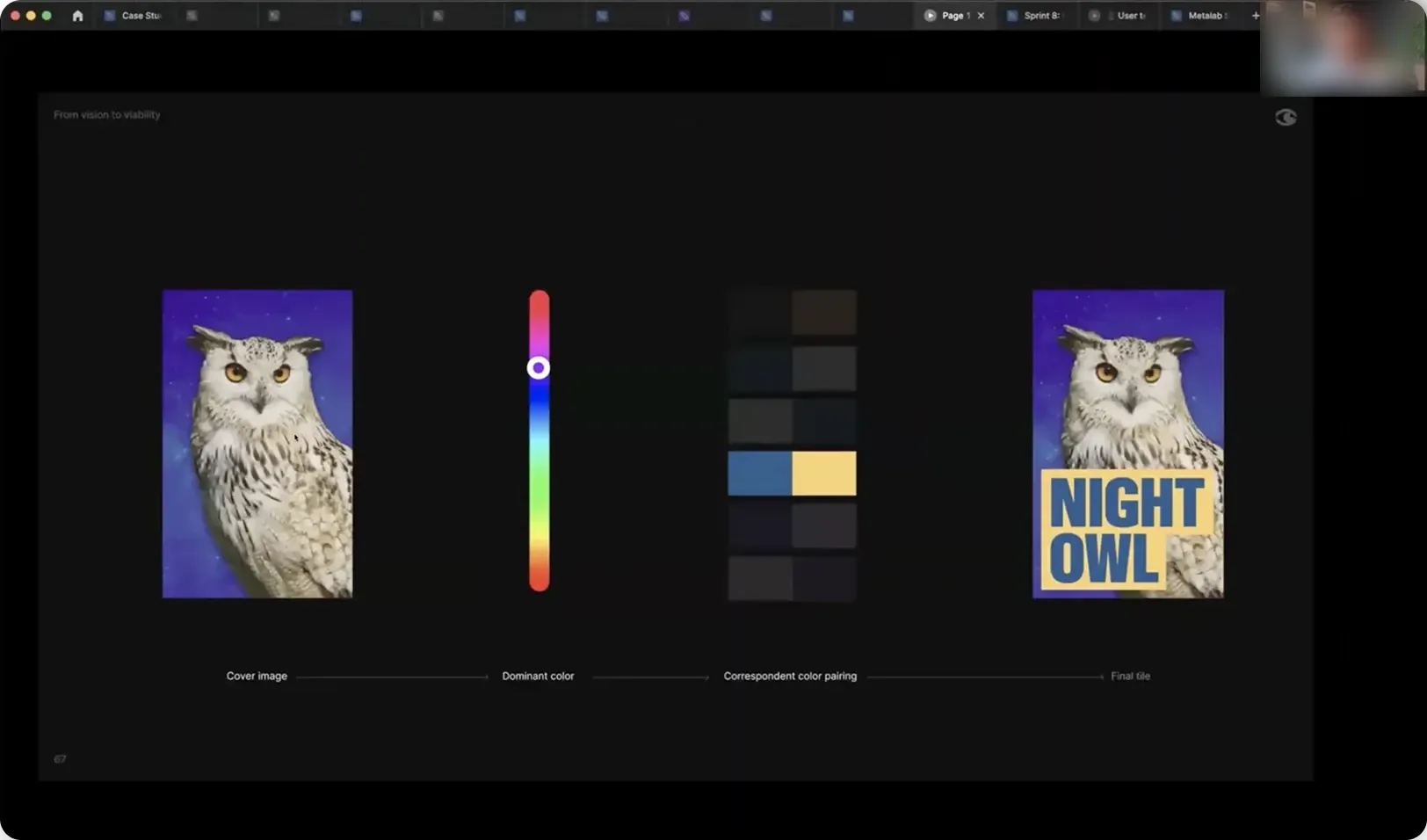
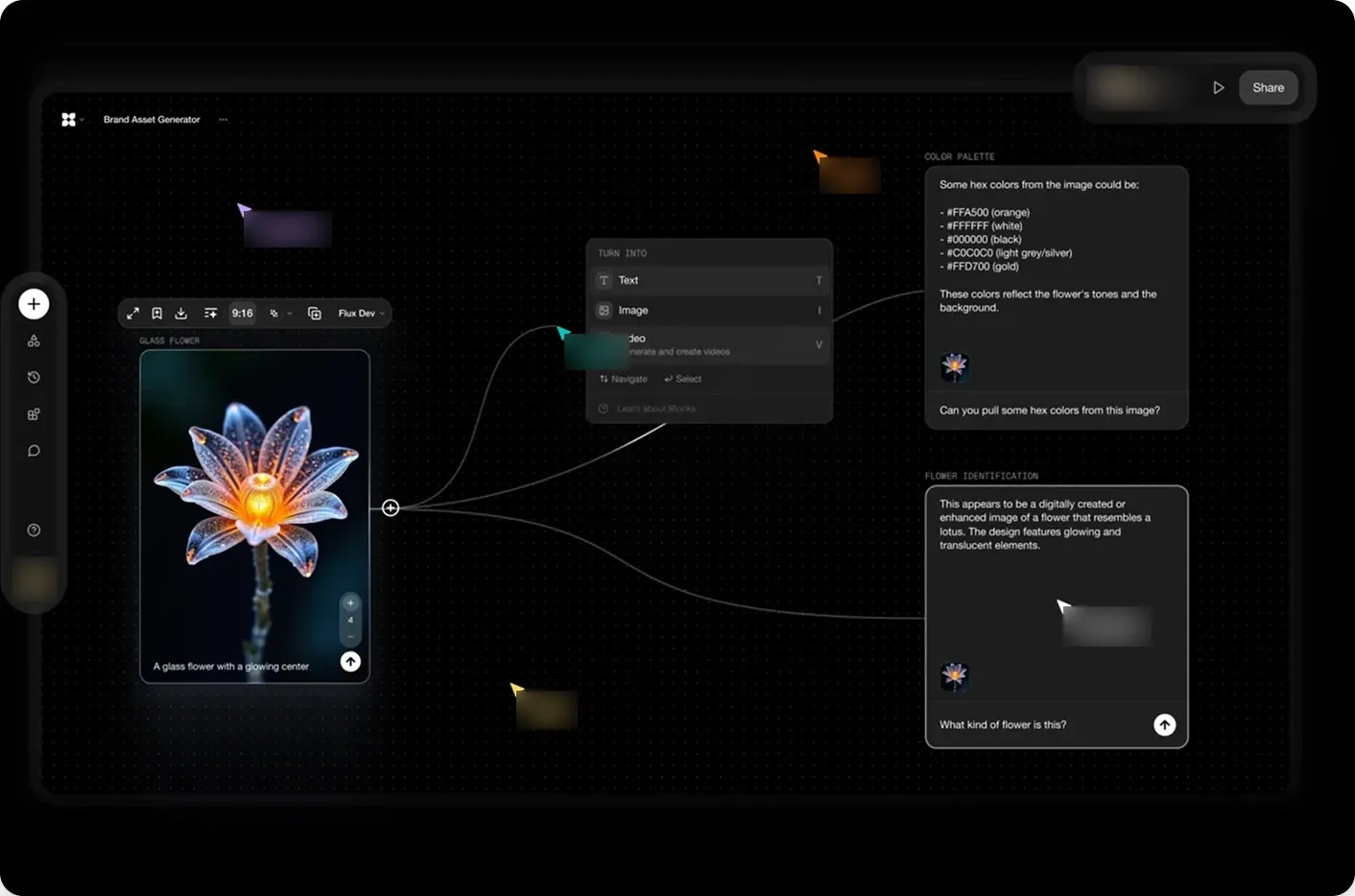
The industry and vendor stream gave people visibility into tools we chose to stand behind. We partnered with Flora because we believed in the software and what it could do, and its sessions showed designers how to use it on their own projects.
Clearing the way to experiment
Everyone agreed on the spirit of experimentation. Our projects varied widely, so designers regularly needed different tools. The existing process billed tools to the client, and that met pushback: designers often wanted a tool to experiment with, not something to charge a client for and commit to.
I partnered with IT to route experimental tool requests through the L&D budget and streamline the approval process.
Results
- 3 to 23 sessions a year.
- ~55 attendees per session, roughly 40% of the company each cycle.
AI learning became a regular part of how the company worked, led largely by peers, with tool access no longer tied to a client’s budget.
Reflection
Inspiration works better than a mandate. We tried making sessions mandatory, and attendance didn’t move. With project schedules this intense, a requirement couldn’t compete with client deadlines. So I leaned into inspiration instead: clear communication about what each session covered and the value people would take back to their own work.
Measure adoption from the start. I surveyed attendees after the first six sessions, but I treated adoption as a year-two problem. Next time I’d set a baseline for how people use AI in their work before the first session, so the program could show change, not just reach.